Monday, 24 February 2014

Are you a problem solving organisation ?

 Are you a problem solving organisation ?

You should look at your business as a problem-solving organization. 

All businesses thrive because they solve problems for consumers — and learn how to profit from it.

Bill Gates reached success with Microsoft because he figured out ways to fix problems. 

Facebook has solved the problem of global communication by making each person’s world a bit smaller. 

People flocked to Oprah Winfrey’s show because they believed she could provide advice for some of their life challenges.
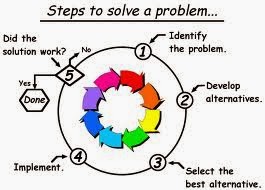
Everyone has some kind of problem that’s waiting to be solved. 
Companies are struggling to stay in business, families are losing their homes, and too many people are out of work. 
As a company and as an employee, you should not be discouraged by the state of the economy – you should look for opportunities.
Become an innovative leader who helps guide your company through the country’s economic struggles. 
  • What can you do to improve the situation for a family that is struggling financially? 
  • What services can you provide for Australians on lower budgets?
  •  Look to solve problems on a global scale with a targeted approach, creating innovative ways to reach out to your customers and meet their needs.

The more problems you solve for more people, the more successful your organisation will be. 

Whether you are a business owner or an employee, you should aim to find new solutions to problems everyday. 

What problems does your business seek to solve, and are you being held accountable for solving them? 

As an employee, how can you start solving more problems for your company?

Successful business boils down to holding yourself accountable. 

You must encourage your team to refocus on your fundamental principles and goals, seeking new and specific problems and developing targeted plans to solve them.

Here are three key tips that will help keep your company focused on problem solving.

1.    Always talk about your clients in terms of solving their problems. This keeps you in the right mindset to effectively meet your customers’ needs. Become the solution to their problems.

2.    Never start your business meeting by discussing efforts to make more money. Your primary goal should be to solve your customers’ problems, and profit should come as a result.

3.    Always think about how you can solve more problems for more people. You should always be seeking opportunities for growth, and the best way to expand your business is to find creative solutions to pressing problems.

Basic marketing - focus on the customer needs and wants and how you can satisfy them.

Tony Park
Business Gardener.
www.businessgardener.com.au 

Friday, 21 February 2014

A Mentor can help you to create your future.

A Mentor could help you create your future 

From Mark Zuckerberg to Tony Robbins, some of the most successful people in all forms of business have credited part of their success to having a great mentor.
Mentors are not always well known people who work in the same field as the people they are mentoring. They can be family members or others who serve as moral and character guides. 
Before you look for a mentor, consider the following.

1. WHAT SKILLS DO YOU WANT TO BUILD?

Before you consider looking for a mentor, you have to visualize your future. Where do you see yourself down the road in five, 10, or 15 years? What kind of work are you doing? What kind of a person have you become? Realize that every worthwhile accomplishment has started out as a dream in someone’s mind. After you have your future goals fixed in your mind, ask yourself who would be the best person to serve as your guide on your journey? What kind of help would be of most benefit to you? Is it technical knowledge, business acumen, or personal guidance? A mentor can serve all these purposes, but usually one is predominant.

2. LOOK FOR CHARACTER BEFORE QUALIFICATIONS

Before moving on to what you think your mentor needs to know, think of the kind of person he or she needs to be. Do you have respect for them as a person apart from what they know? Would you be pleased to have them as part of your family? If the answer to these questions is no, look elsewhere. Even though they may be highly knowledgeable, intelligent and technically brilliant, your subconscious may have a hard time accepting any advice or ideas that come from them. A good mentor should always leave you feeling positive and inspired.

3. SOMEONE WHO WON'T TELL YOU WHAT TO DO.

In order to grow, we need to make our own decisions and mistakes. A good mentor will allow us to do both. He or she will never tell us what we should or need to do. Instead they will offer and share ideas based on their own experiences. They will freely offer what has or hasn’t worked for them and leave it up to you as to whether you take their advice. Take from them what is valuable to you and leave the rest.

4. FIND A PERSON WHO IS OPEN, HONEST, AND NOT EGO DRIVEN

In order for feedback to be worthy from anyone, it must be honest and forthright. As well as giving you praise when your mentor thinks you have done something well, it is equally important that they challenge and encourage you to accomplish more when you are struggling. A good mentor does not get upset or angry when you don’t follow their advice. They are not ego driven and don’t see your success or failure as a direct reflection on their mentoring skills. They accept and know that, like themselves, you are your totally responsible for your own success and failure in life.

5. DOES YOUR POTENTIAL MENTOR HAVE A HISTORY OF CREDITING OTHERS FOR SUCCESS?

Effective mentors are people who have a record of service to their community, organizations or groups they belong to. They see beyond their own needs and have a desire to make their community and the world a better place to live. While others recognize them for their success, they don’t bring this up, and if asked about it, will give credit to others. Others will know them for their unselfishness and desire to give back.
Tony Park at the Business Gardener can assist you to create your future. I have many experiences across a number of industry sectors, had many positive experiences and also a large number of failures that I can share.
Contact me at tony@businessgardener.com.au to see what we can do together for you.

Monday, 17 February 2014

When a Salesman isn't a Salesman


When a Salesman isn’t a Salesman


A business owner decides to beef up his company’s sales talent. He forks out a hefty salary for a “proven performer” from another industry; then…nothing.
empty suitThe salesman (or woman) is glib, professional and hard working. The owner devotes more resources to marketing and lead generation in an attempt to make good on his investment. Still no results.
Frequently, the owner assumes the blame for the shortfall. After all, the employee earned huge commissions in his previous job. He sold to CEOs, or to high net worth individuals, or products that were ten times the price of yours. Why can’t he sell your stuff?
Sales is a relative term, and sales compensation is a relative measure. I knew a former tennis pro who had made a huge salary “selling” medical devices to surgeons. When he transitioned to selling OEM hard drives, he failed miserably. He had qualified leads, and heavy marketing to support brand identity. His skill, however, was in demonstrating to the doctors how they could work faster and more profitably if they insisted the hospital pay for his devices. Faced with cost-conscious purchasing managers who perceived his product as a commodity, he was lost.
The owner of a technology company shared this with me last week. He is looking for reps to sell managed services to large corporations. There are plenty of highly compensated salespeople in the technology world. What he has found, however, is that selling networking equipment, software or telecommunications gear has little in common with “invisible” services located in the cloud.
Both examples are similar. In the first, the salesperson moved from selling to an end user who was focused on technical issues to a financial buyer. In the second the shift is from selling a known solution for a known problem to selling change that is disruptive to an entrenched infrastructure. Other than calling both jobs “selling,” they have very little in common.
The technical aspects of presenting a solution to customers are basic to all sales, but that doesn’t mean that all sales skills are transferrable. Someone who was provided with qualified leads likely lacks the training for effective cold calling. One who represented a well-known brand may not be prepared to educate buyers on a need they haven’t yet identified. Selling to large corporations is nothing like selling to small businesses.
Choosing an effective salesperson has little to do with how much he made in a previous position. Translating his or her success to your business depends on who he sold, how he sold, and what he sold. If those three factors match your sales profile, then prior successes are worth considering.
Tony Park the Head Gardener at the Business Gardener, can assist you in the skills to ensure you are selling to your market - not the market from your last position.
www.businessgardener.com.au

Tony Park

Wednesday, 12 February 2014

Learn How To Grow Strategically

Learn How to Grow Strategically

As entrepreneurs, we’re pulled in a million different directions every day. Although we start our days with the best of intention, it’s easy to get pulled off course with emergencies (caused by others) putting out fires (created by others) and shiny objects (marketed by others.) And, even a small course deviation, can change the course of your business over a period of time.

small_business_to_do

As the business owner, your primary job is planning and change which requires a disciplined way to think, plan, act – and rethink and replan every day. This is strategic thinking.
According to Chief Executive Magazine, strategic thinking is the most valued skill for entrepreneurs today yet only 3 out of every 10 entrepreneurs actually think strategically.
Not every entrepreneur is endowed with the gift of strategic thinking however there are several steps you can take to ensure you put your business on a strategic path each and every day.
1. Begin with the end in mind – To understand where you’re headed, consider these questions:
Why are you in business?
What do you do?
What do you want to achieve?
How will you get there?
These questions, and many more, are answered with the creation of your missionvision, strategies, objectives and goals – or your strategic plan.

2. Think – and act – strategically everyday. 
Did you know that 85% of entrepreneurs spend an hour or less a month strategic thinking? Given your primary responsibility being that of planning and change, carving out time for strategic thinking, planning and acting is vitally important.  Strategic thinking and planning is even more important knowing 80% of most activities that entrepreneurs are involved in each day contribute to only 20% of the business long-term values. The use of a daily goal planner gives you new insights and concrete steps for improvement.
3. Constantly question your own opinion. 
We all develop blind spots that can prevent us from taking full advantage of new developments in our industry.  By not questioning on our thoughts/opinions – or always believing we’re right –  we can destroy  our business no matter how talented or brilliant we are.
Once you add these three actionable steps to your daily to-do list, strategic thinking becomes a daily habit and, along with it, business growth.
Tony Park
Business Gardener.

Friday, 22 November 2013

The 5 worst pieces of businesses advice that I have had


The 5 Worst Pieces of Advice for Small Business Owners


When you’re starting a business, there’s no shortage of people eager to hand out advice. It seems that everyone, even someone you've just met, has an opinion on how you should be developing your product, running your marketing, handling your finances and much more.
I'll be the first to admit that I've met some very smart people and have had great mentors over the years. Their contributions have been invaluable to my successes. Yet after launching many companies over 35 years in business, I have come across some terrible advice.
Below are the top five bits of advice that I could have done without.

1. "Hire people you know."

I've had many people tell me that it's always better to assemble a team of "known quantities" — friends, colleagues or former employees whom you know and trust. But I've discovered that for me, the best hiring decisions are based on the specific positions I need to fill at that moment in time. In other words, I need to focus on the specific expertise and skill sets the company needs, rather than trying to piece together how Jill, Sally and Joe will fit into the new business.
In addition, if things aren't working out between an employee and your company, you need to part ways (and usually, the sooner the better). You may be more reluctant to let friends go, even if you know they aren't good fits.

2. "There's no room for you in the market."

The key to business success doesn't always hinge on finding a completely empty field; rather, it’s how you define your company and its place in the market. Starbucks wasn't the first company to sell coffee, but they did revolutionize the coffee shop by selling an experience along with a caffeine fix. Still, numerous boutique coffee shops are able to open and thrive today, even though there's a Starbucks around the corner.
Rather than struggling to come up with a brand new idea, take a look at your target industry and see where there's a void to be filled. Figure out the best possible way to fill that need and run with it. You don't always have to blaze a new trail, but you need to know who you are.

3. "You have to be cheaper than the other guys."

I admit that I fell into this pricing trap with a number of my companys. I felt that the only way I could compete with the "big guys" was to undercut them on price. So, I dropped our prices. My business grew, customers were happy, more customers came in, yet we were nearly losing money with every new order.
Many young companies feel the pressure to discount their prices heavily in order to win business. While customer acquisition is important, attracting customers at unsustainable price levels will just result in a race to the bottom. I’ve learned that you’re better off in the long run to focus on how to bring more value to customers, rather than simply slashing your prices. After all, someone will always be able (or willing) to absorb a lower cost than you. You'll need to find a new way to stand out, and then work as hard as you can to be exceptional in those differentiating areas.

4. "Social media is free."

Over the past several years, I've had people tell me that starting a small business today is much easier than a decade ago, because of all the free marketing on FacebookTwitter and Yelp. Sure, you don’t have to spend a dime to join Facebook, create a Twitter account or start a blog. But, I think a more apt comparison is that social media is free like a puppy. It may not cost much to bring a shelter puppy home, but from day one, it's an endless whirlwind of training, toys and treats.
Likewise, social media is far from free once you factor in the blood, sweat and tears it demands. From developing fresh content to keeping up conversations, social media requires nonstop commitment once you start. Unless you consider your time (or the time of your employees) worthless, then there’s a significant cost involved with social media.

5. "You have to spend money to make money."

It's risky to think that throwing money at a problem is your silver bullet. Sometimes, creative thinking and strategy work far better than a checkbook.
Its important to learn the difference between spending money and investing in the business. Certainly, money can scale a business faster, but only when you spend money on those things that will produce more money in return.

Final Thoughts

People will always give you advice — some good, some bad. The key is to never forget that you are running the show. Other people's opinions should always be viewed through the context of your own experiences, convictions and value system.
Final decisions are always up to you, so there’s no blaming someone else for bad advice.
I have many stories - good and bad that have developed and grew businesses, but also learning opportunities that for me we the bad ones - but I can share so you don't make those same mistakes.
Contact me
Tony Park
Head Gardener at Business Gardener - www.businessgardener.com.au 

Wednesday, 6 November 2013

PR is a great way to grow your business

 PR can help you create awareness of your company and your services.
PR is a great way to generate leads for your marketing pipeline and it all starts by defining who you are and why people should buy from you. When you have completed those first steps, your next step is to take your message out into the world!  
Lets look at how to promote your business with a press release.
Press Releases
Developing a press release – and getting it covered in publications from your target market – adds credibility to your message and delivers that credible message to your audience.
pressrelease-1A press release should announce something newsworthy.  Hiring new people, adding additional services, bringing on new clients, and purchasing new equipment are all announcements that are worthy of a press release. These types of announcements show how your business is growing, and there’s not much better news to share with your target market!
When writing the release, you want to answer the questions – who, what, where, when and why. The most important of these questions is the why. Why should someone care about this news?
For example, if you have acquired a new customer, your announcement can say:
Acme Print and Marketing Services is pleased to announce that The Big Bank has chosen Acme to handle all of their print production and direct marketing communications needs. The Big Bank is another example of Acme’s expanding role as a leader in providing print and marketing to organizations in the financial services industry. 
The news is that The Big Bank has become a client; the story is that Acme is now becoming a go-to resource for the financial services industry.
Note that if you are announcing the purchase of new equipment or technology, the vendor you buy from is usually more than happy to write a press release about your purchase. These vendors are sometimes able to get coverage in publications and sites where you might not be able to, so be sure to ask!
Distributing the Press Release
Once you have finalized the press release, (and received approval from any customers or vendors that you mention) send your press release to publications and websites that cover your industry and reach the target audience you are trying to connect with. This may require a bit of research, but you want to be sure you are speaking to an audience who cares about your message.
newsreleaseIn our Acme Service Provider example, it would be beneficial to reach out to publications that focus on marketing and communications for financial services.
In addition to sending the press release to publications and websites, you can also send it out via a distribution or wire service. These services will send your press release out thousands of publications, and can help boost your SEO rankings.
Font is a company that can assist you and Becher can assist you in this.
Repurposing Your Content
Once your release is out, there are several ways to keep the news alive. First, be sure to post links to the press release from all your social media outlets – Twitter, Facebook, LinkedIn, etc.  In addition to the link, post a bit of the story as well. Acme could tweet “More Good News from Acme”  and a link to the press release.
In addition, you can take the content of the press release and rework it into a blog post. Note that these are different communications channels, so you want to be sure you edit the content so that it reads more like a blog post and is more conversational.
This is a first step and creates positive Brand Values for your business - something you can grow on for other marketing and advertising.
Tony Park
Business Gardener
www.businessgardner.com.au 

Monday, 4 November 2013

Content Marketing helps to create respect with WEB 2.0

Hi everyone,

How to Spread the Word Through Content Marketingpeople are either getting into using WEB 2.0 tools like facebook, blogs, LinkedIn etc... or they have already have a presence. Some people are looking to use these as a replacement to advertising and see it as similar to say TV or Radio - or even just a press add and think that all these great people will see it and come to buy your product. 

The reality is far from the expectation.

You need to create a brand value a profile of relevant information that makes your web site, your blog your information stand out from the Billions and Trillions of web pages and pieces of information that is available.

Just putting up an add saying how great you are - a price and come and get it is not good enough anymore (was it ever) . 

A major way to get recognition of your brand values and then a possibility of a sale is to have relevant content to inspire, inform and educate to gain an understanding from potential purchasers that you have the relevant product or service for them, based on information and respect gained from that ongoing relationship.

Over the following weeks we will have more information on the gaining of respect and relationship selling, however below is an article from Katherine Duncan on a some aspects to gain some of this respect by making sure you have relevant content on your WEB 2.0 tool.

Tony park
Head Gardener
www.businessgardener.com.au 

How to Spread the Word Through Content Marketing

Image credit: Shutterstock
Content marketing, the creation of original written and visual materials used to generate leads, is becoming increasingly popular online--because it works. According to the Content Marketing Institute, 91 percent of B2B marketers and 86 percent of B2C marketers are employing the technique, and more than half of both groups plan to increase their efforts in 2013.

"Those who produce keyword-rich online content, including YouTube videosblog posts, articles and so on, consistently show up on the first page of search results for their targeted keywords," writes marketing expert Ann Handley. The biggest appeal to this approach is cost. In lieu of shelling out thousands of dollars to buy advertising or keywords, marketers employ creativity as currency.
Here are five tips for doing it right:
1. Understand your audience.
Study your prospective audience to determine their needs and interests so you can appeal to them in an entertaining manner. Do it by monitoring keywords and topics (including names of competitors) on your social media platforms to see which drive the most Facebook Likes, Twitter shares, blog comments, etc. Once you have attracted a small audience, use their feedback to create content that will pull in even more followers.
2. Make a plan. 
Content marketing requires you to sustain whatever momentum you build through regular postings (daily is best). To keep it going, you'll want to develop a communications strategy that supports--not distracts from--your overall business goals by laying out a detailed editorial calendar of topics for the next few months. Then make sure to share the calendar with the rest of your team, doling out assignments where possible and asking the staff to contribute ideas for new content going forward.
3. Set high standards.
Apply the same standards to your online content as you do to the rest of your business. While effective content generates and nurtures leads, poorly executed content can have the reverse effect and actually damage your brand, causing you to lose readers and business. Play to your strengths: For example, if you're a skilled photographer, focus your content on teaching people how to get the best shot.
Bear in mind that the tone you use in a company blog or white paper (more formal) should be different from how you write for social media (casual and conversational). If you don't consider yourself a skilled writer, you can hire freelancers to do the job. But be sure to provide your writers with detailed editorial standards to follow.
4. Celebrate variety.
Don't limit your online content to routine blog postings or case studies. Consider offering product comparisons, a resource gallery or a directory of helpful information about your industry. Rethink common elements of your website. For example, perhaps you can use your FAQ page to address difficult questions related to your industry, not just your company.
5. Share wisely.
You've devoted so much time to creating meaningful content--now it's important that you know how to share it across appropriate social media channels. To build your brand's presence, set aside a chunk of time each day and use it to connect with others on various networks (LinkedIn, Facebook, Twitter, Instagram). And avoid being too promotional; instead, share your best content when you believe it can provide obvious benefits to your followers.

Happy blogging - Tony Park
If you want some advice contact me at 
tony@businessgardener.com.au